
The Magic of Allowing Students to Get Lost in Learning
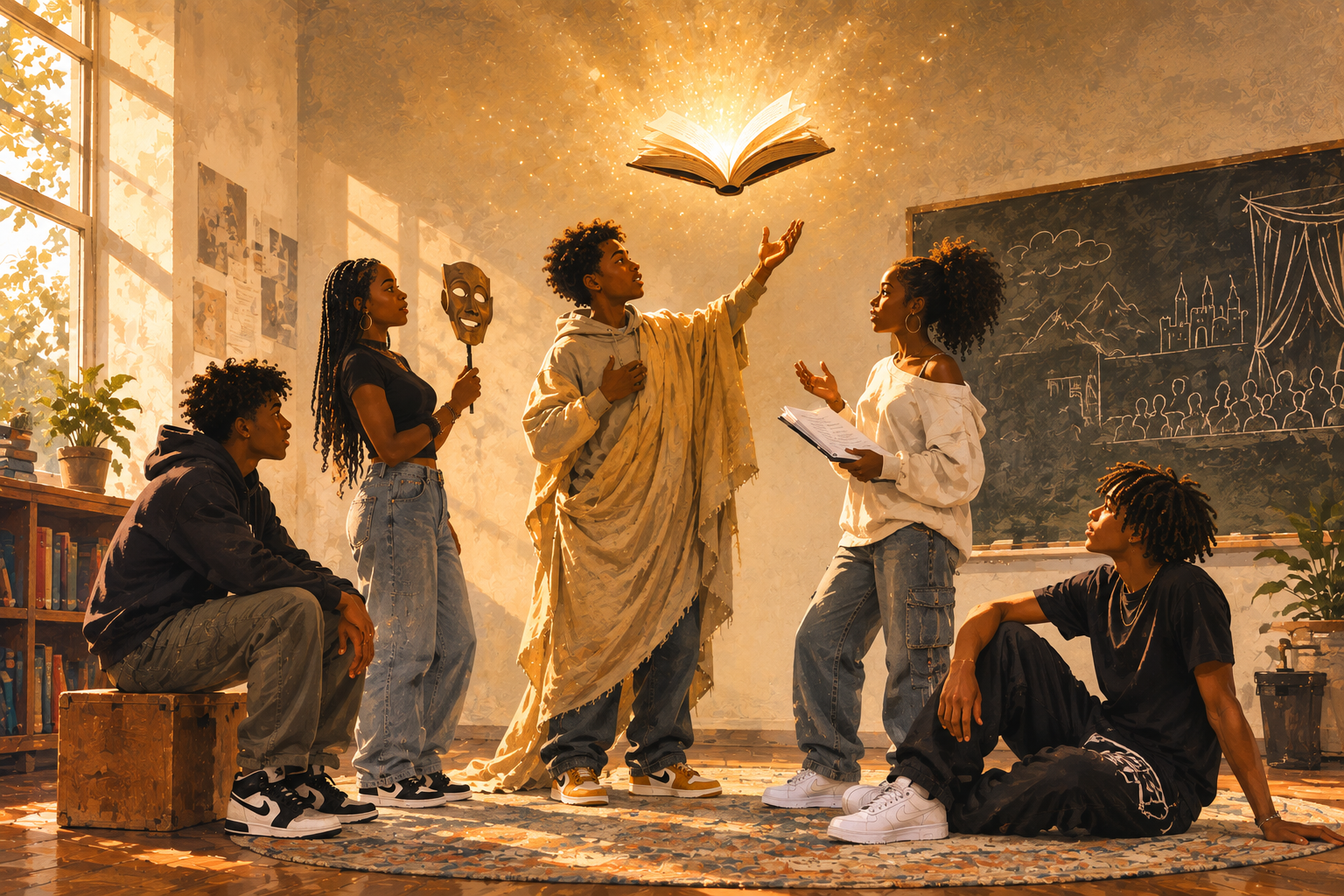
I have spent the last 12 years working with families, communities, and organizations using drama-based techniques and principles to unpack trauma and tell stories. I never cease to be amazed at how students, and youth in general, learn and teach when they are allowed to get lost in learning.
I generally work with youth considered “challenging”—young people in detention centers, gang-involved youth, and students in alternative schools. Time and again, they impress me with the clarity and agency with which they process their lives when we create the right space for them to do it.
I want to share one of our most recent projects with a local alternative school.
Out of the Ashes worked with a selected group of youth at an alternative school in Wilmington, Delaware. Over a six-week period, the students were led through discussions and exercises to create a script about an issue that was important and relevant to them. The group chose gun violence and interpersonal relationships.
Over the first five group sessions, a solid storyline evolved and character selection developed organically. It was an interesting process to embark upon with the youth. The students were very detailed and intentional about how the characters would respond to tense and emotionally uncomfortable scenes. The language, context, and responses were realistic and mirrored some of the students’ real-life experiences.
What really impressed us was how they introduced help into the story.
They wrote in a supportive friend and a respected, relatable teacher as sources of intervention. The restorative elements of the script were entirely the students’ work. We did not tell them how to resolve the conflict. They showed us.
Our team learned a simple truth: Often, even some of our most challenging students know when they are wrong. They know how to ask for help and who they can go to. They know how to be a positive peer. The challenge is creating an environment where they feel comfortable enough to demonstrate what they already know.
Our process creates that space for robust discussion, reflection, and processing. The students buy in, especially when they know their work will ultimately be memorialized through a professionally produced video.
The sixth session is all action.
We work with a local video production company to shoot the scenes in a safe and secure location. The students get to see the story they created come to life. Once shooting is complete, we take the script, our session notes, and the finished video and use them to create an original workbook and discussion guide.
The result is something much bigger than a six-week group. The young people who participate are engaged and educated through the creative process, while their experiences and insights become a tool that can be used to engage and educate other young people.
That is the power of our methodology.
Instead of simply teaching young people a lesson, we create the conditions for them to discover it, discuss it, demonstrate it, and ultimately teach it to others.
Sometimes the most powerful learning happens when we allow students to get lost in it.
Here is one of our most recent projects.